

EXTREMELY LIGHT: The Roasting Philosophy and Capability of LIX Roastery
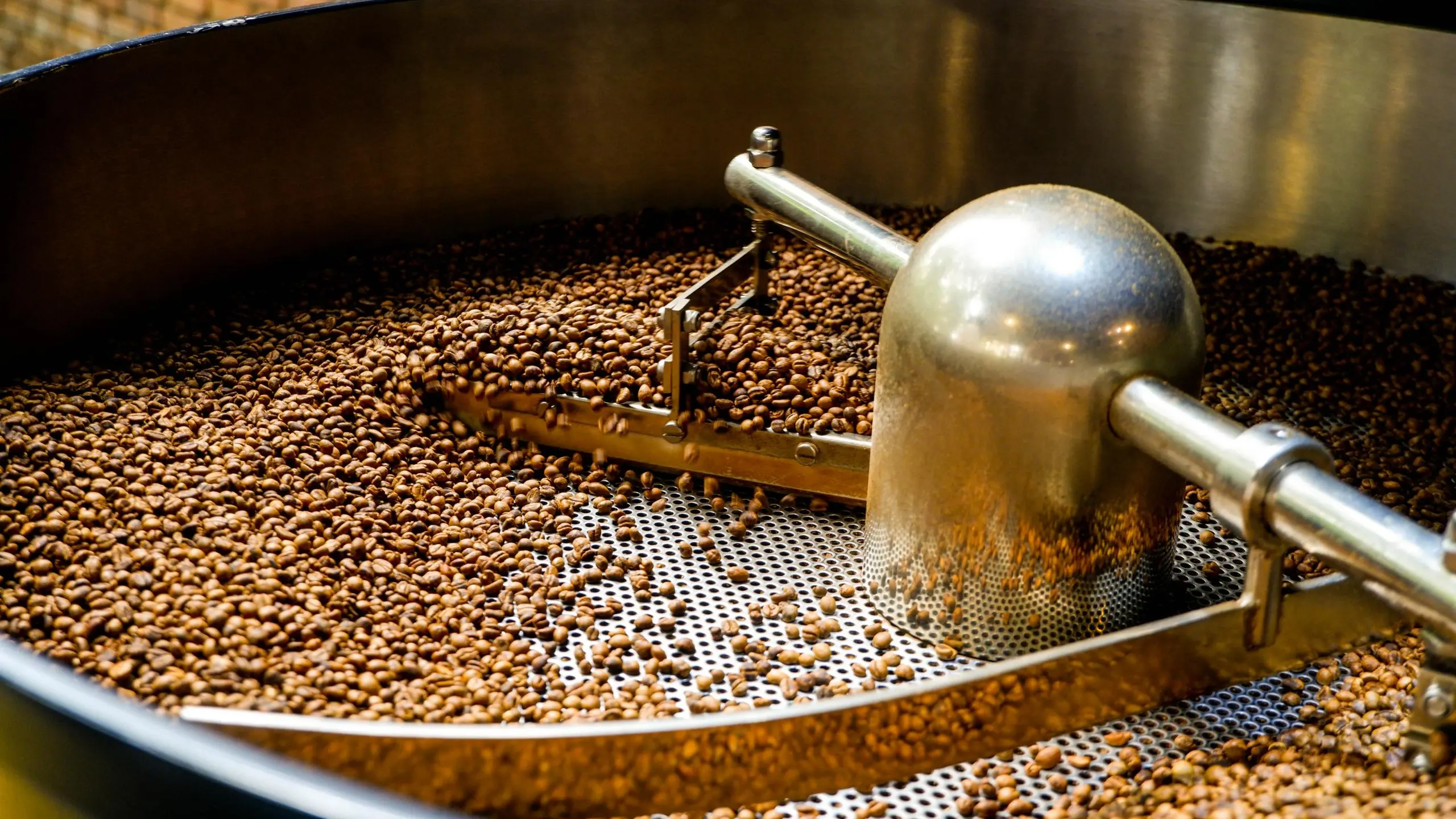
LIX uses Extremely Light because it reflects how we want coffee to be expressed: with the material itself at the center. Roast degree, energy application, and development are controlled so that differences in variety, producing region, crop, and processing can remain perceptible in the finished product.
The experience behind this approach also builds on roasting knowledge developed earlier within the XLIII Coffee ecosystem. Historical data around temperature, time, and development provides useful reference points, but moving that experience onto the LIX roasting system requires recalibration around machine design, batch size, and the actual response of each coffee.
Extremely Light at LIX is therefore defined less by one temperature or one roast time than by control, material response, and the result of the roast.
One Roasting Principle, Multiple Calibrations
A roast profile emerges from the interaction between coffee and machine.
Sensor position, drum design, heat-transfer behavior, airflow, batch size, and the physical characteristics of green coffee all influence how a roast develops.
The same Extremely Light philosophy can therefore require different operating parameters from one coffee to another.
LIX follows energy application, Rate of Rise (RoR), First Crack, and development, then reads those process variables alongside sensory results to establish an appropriate operating range for each coffee.

DRUM DESIGN

HEAT TRANSFER

GREEN COFFEE CHARACTERISTICS

BATCH SIZE

ENERGY INPUT

RATE OF RISE (RoR)

FIRST CRACK

SENSORY RESULTS
The Giesen Roasting System: From Sample Roast to Production
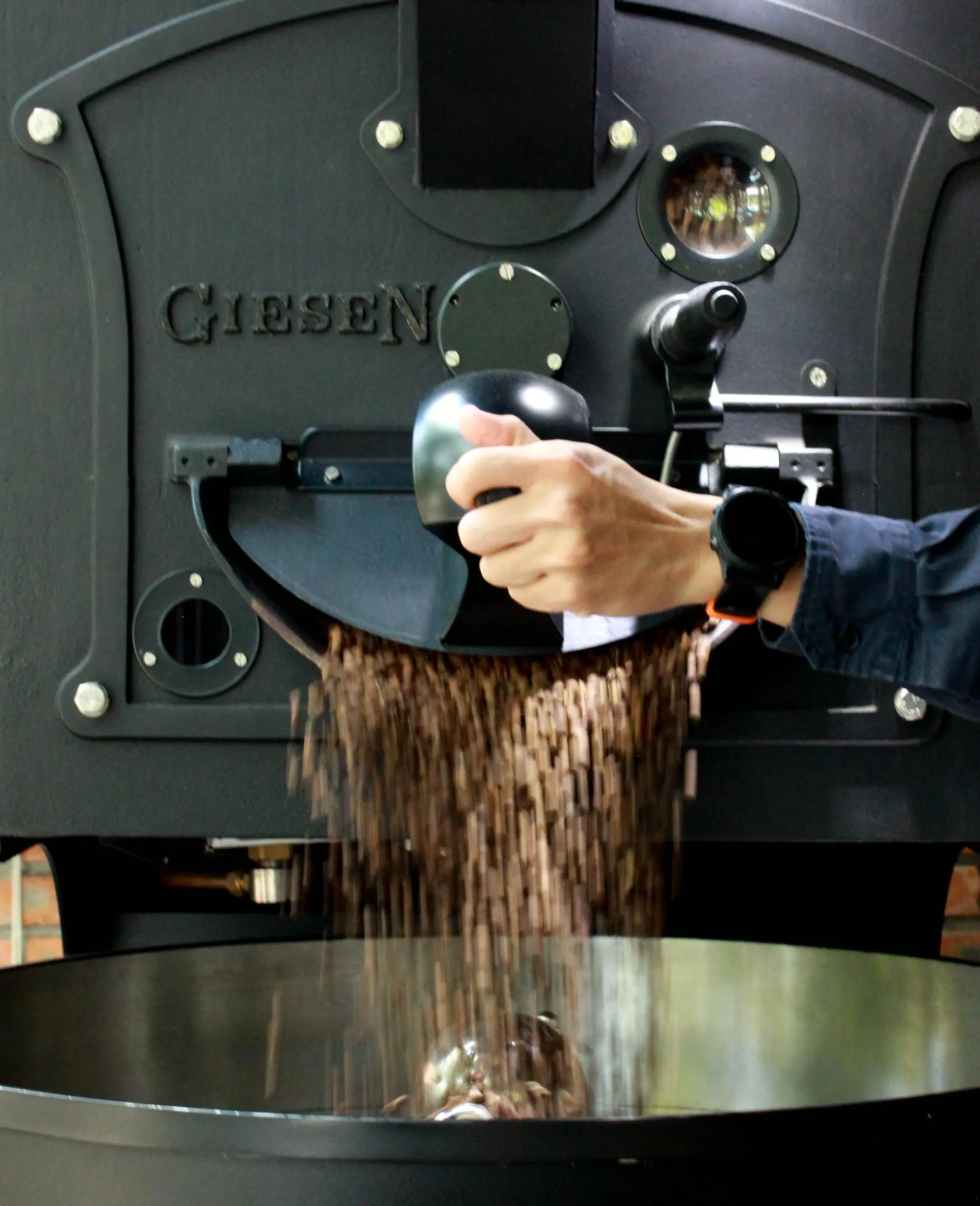
LIX operates a multi-scale Giesen roasting system, with batch capacities ranging from 200 g and 1 kg to 6 kg and 15 kg.
This allows product development to move continuously from early sample roasting and observation of the material, through profile development and validation, and eventually into larger production batches.
At smaller scales, the priority is to generate enough information to understand the coffee, test energy strategies, and evaluate results through cupping.
Once a profile has been established, larger batch sizes allow the team to examine how that profile behaves under more realistic production conditions and make the adjustments required before stable production begins.
Scale-up is not a matter of copying the same temperature curve onto a larger machine.
Each roaster has its own heat-transfer behavior, physical configuration, and operating conditions. LIX therefore carries the same Extremely Light intent across scales while recalibrating energy, airflow, RoR, First Crack, and development around the way the coffee actually responds on each system.
The Giesen system consequently functions as more than production equipment. It forms a development platform across the full process:
sample roasting → profile development → sensory validation → scale transition → production roasting
Across batch sizes, Extremely Light depends on the ability to control the variables that directly influence roast progression.
At LIX, that control is organized around three main groups: energy input, airflow / underpressure, and movement of the bean mass.
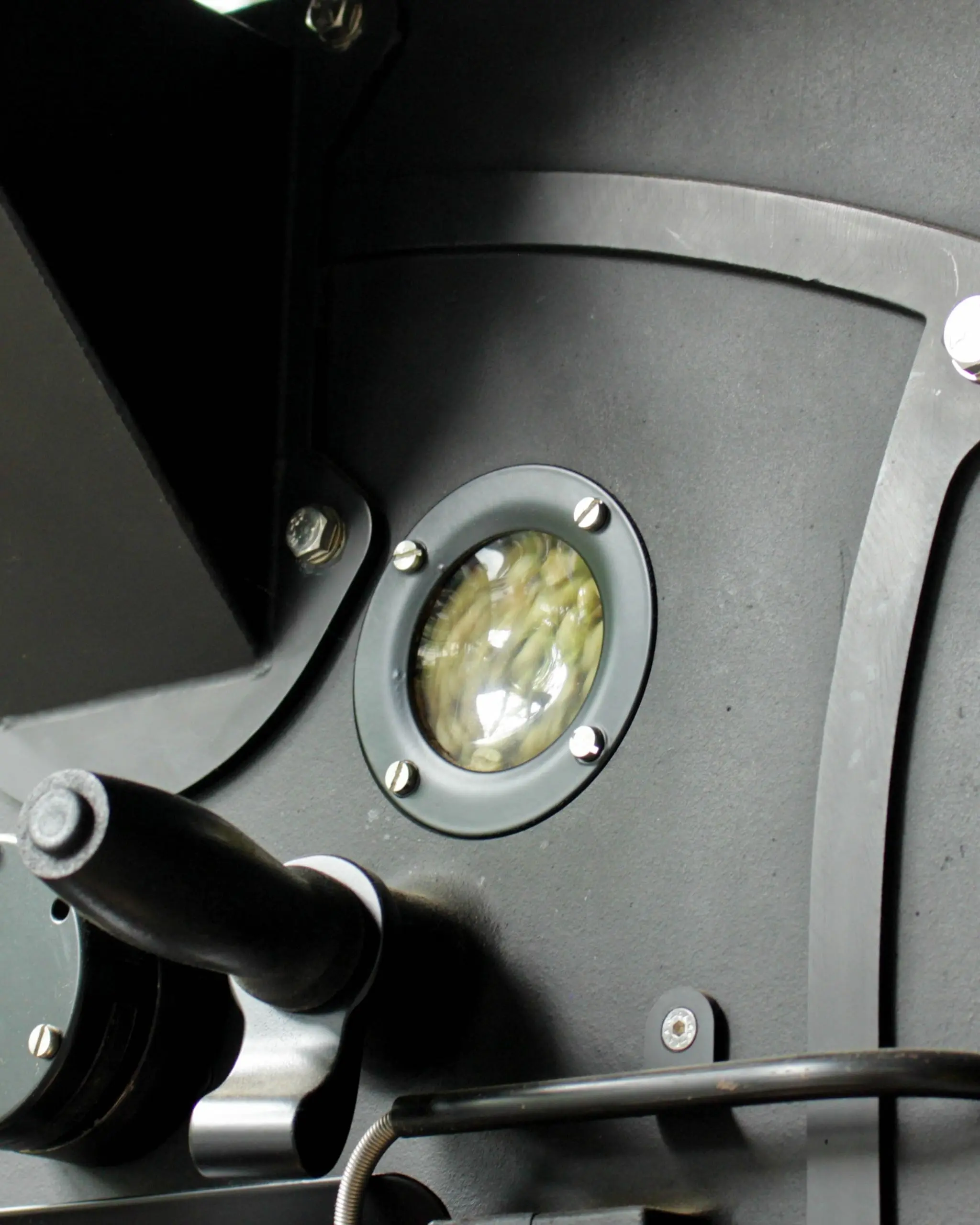
ENERGY INPUT
How energy is applied through each stage influences RoR, the approach to First Crack, and the energy available during development.

AIRFLOW / UNDERPRESSURE
Airflow and underpressure contribute to convective heat transfer while helping move moisture, smoke, and chaff through the roasting environment.

BEAN MASS MOVEMENT
Drum speed changes how the beans interact with both the drum surface and the flow of hot air.
Energy input directly affects the rate at which coffee absorbs heat and the progression of the roast curve.
The way energy is applied through different stages influences Rate of Rise, the timing of First Crack, and the amount of energy carried into development.
For that reason, LIX follows energy as a continuous process from the beginning of the batch rather than focusing only on an end temperature.
Changes in airflow can shift the balance of heat transfer inside the drum.
Airflow is therefore adjusted alongside energy input so that thermal progression remains appropriate for the way the material is responding.
Drum speed affects how the bean mass moves through the roasting chamber and how individual beans interact with the drum surface and the surrounding hot air.
It therefore provides another control variable for balancing heat-transfer mechanisms during profile development.
These three groups are read as a connected system.
LIX interprets RoR, First Crack, and development in relation to the way energy, airflow, and bean movement have been managed from the beginning of the roast. That operating data is then compared with cupping results to determine the appropriate adjustment for each coffee.
One Roasting Philosophy Across Multiple Origins
LIX works across a broad range of coffees, including Specialty Coffee, Arabica, Robusta, and other sources from Vietnam as well as producing countries around the world.
That diversity changes how individual roast profiles are built, while the Extremely Light principle remains consistent.
Density, moisture, bean size, variety, processing method, and physical structure create different thermal responses.
The team therefore adjusts energy input, airflow, drum speed, RoR progression, and development according to the data and behavior of each lot.
Consistency at LIX lies in the philosophy. Adaptability lies in how that philosophy is applied to the material.
Read the Coffee Before Applying Heat
Extremely Light begins with the structure of the green coffee itself.
Arabica and Robusta differ physically and compositionally, while coffees within the same species or variety can continue to vary according to Origin, crop, processing, and other production conditions.
Moisture, density, size, processing information, and sensory profile provide the initial context.
Trial roasting then reveals how the lot actually responds to heat.
These two layers – what is known about the material and how it behaves in the machine – are brought together before a reference roast profile is established.
Vietnamese coffee is an important focus within this development process, while the same evaluation framework can be applied across other Origins within the LIX sourcing network.
Cupping Validates the Roast
With Extremely Light, roast color alone does not define success.
A very light roast only works when the internal development of the coffee supports the intended sensory structure.
Cupping is therefore used to evaluate clarity, sweetness, acidity structure, body, aftertaste, cleanliness, and other signals that may indicate whether further profile adjustment is required.
The roast curve tells us what happened in the machine.
Cupping tells us how that result appears in the cup.
After development roasts, attributes such as acidity, sweetness, body, aftertaste, balance, and cup cleanliness are read alongside roast data.
This allows the team to identify which parts of a profile should remain stable and which still require adjustment.
That distinction becomes especially important at very light roast levels.
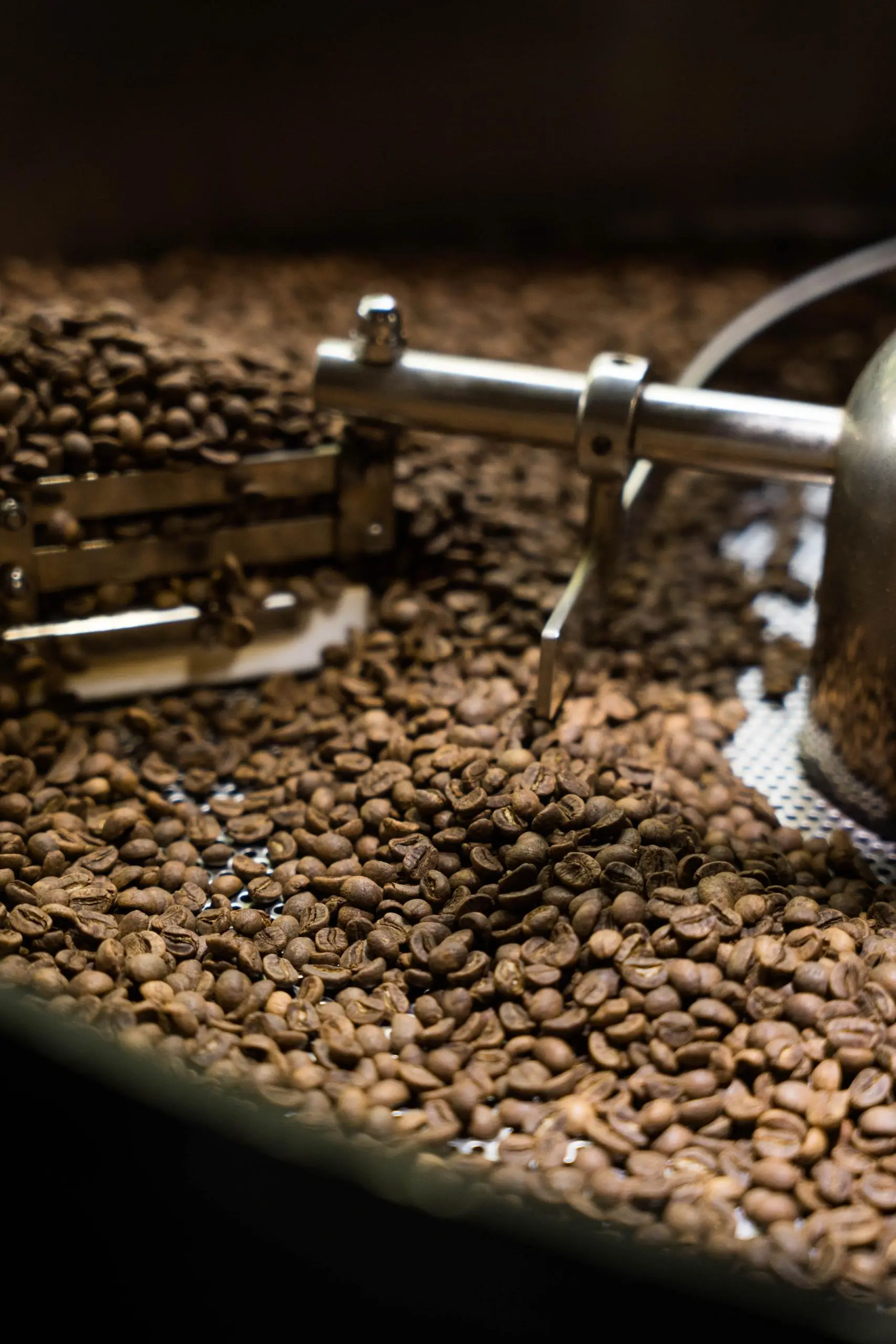
The technical objective is to achieve sufficient development within a relatively short roast while maintaining the clarity, sweetness, and extraction characteristics intended for that coffee.
The roast – cup – adjust loop turns Extremely Light from an aesthetic idea into a method that can be evaluated through both operating data and sensory results.


Keeping Origin Recognizable After Roasting
The Extremely Light philosophy at LIX can be reduced to one principle:
roasting should reveal Origin rather than allow roast character to overpower the material.
Within “Describe the Origin — Describe the Endeavor,” roasting is one of the Endeavors that carries the value formed at Origin into the final product.
The role of the Roastery is to perform that part of the work through a process that can be monitored, validated, and repeated, while allowing characteristics formed at the producing region and during the stages before roasting to remain present in the finished coffee.
From a Roasting Method to Roasting Capability
Roasting capability at LIX is built around the connection between three layers:
understand the material → control the process → validate the result
Green coffee data provides the basis for reading the material.
The Giesen roasting system provides the ability to adjust and monitor the key variables of the roast.
Cupping closes the feedback loop, allowing what happened inside the machine to be compared with what appears in the cup.
Extremely Light connects those three layers into one roasting system.
Every coffee has its own profile.
Every Origin presents a different thermal problem.
The principle remains the same.
Develop the coffee sufficiently for its structure and sensory potential to become clear, while preserving the ability to recognize the characteristics that came from the material itself.
That is how LIX Roastery builds a consistent roasting language across different Origins: read the material, control the energy, validate through sensory evaluation, and allow the coffee to keep expressing where it began.
JOURNAL
View allFrom October 8–10, 2026, LIX Roastery will be at Cafe Show Hanoi 2026, Hall 2 – Vietnam Exposition Center (VEC), Dong Anh, Hanoi.The event is an opportunity to introduce how LIX develops coffee for international B2B markets and, more importantly,…
In international coffee trade, raw-material quality is the starting point, but it is not enough on its own to create a market-ready commercial product. Between the producing region and the buyer are a series of connected stages: raw-material evaluation, product…
Extremely Light is the roasting philosophy applied across all commercial coffees at LIX Roastery. It shapes how the Roastery reads green coffee, manages energy, and evaluates the result of a roast. The principle is straightforward: roasting should make the character…
When a roasted-coffee lot leaves the production system, processing is complete, but the preservation challenge is just beginning. The coffee is immediately exposed to variables involving gas release, oxygen, moisture, and temperature changes throughout storage and logistics. At LIX Roastery,…